One Blog Post, Five Channels: How to Repurpose Legal Content Across Your Marketing
By Brandon Richards ·
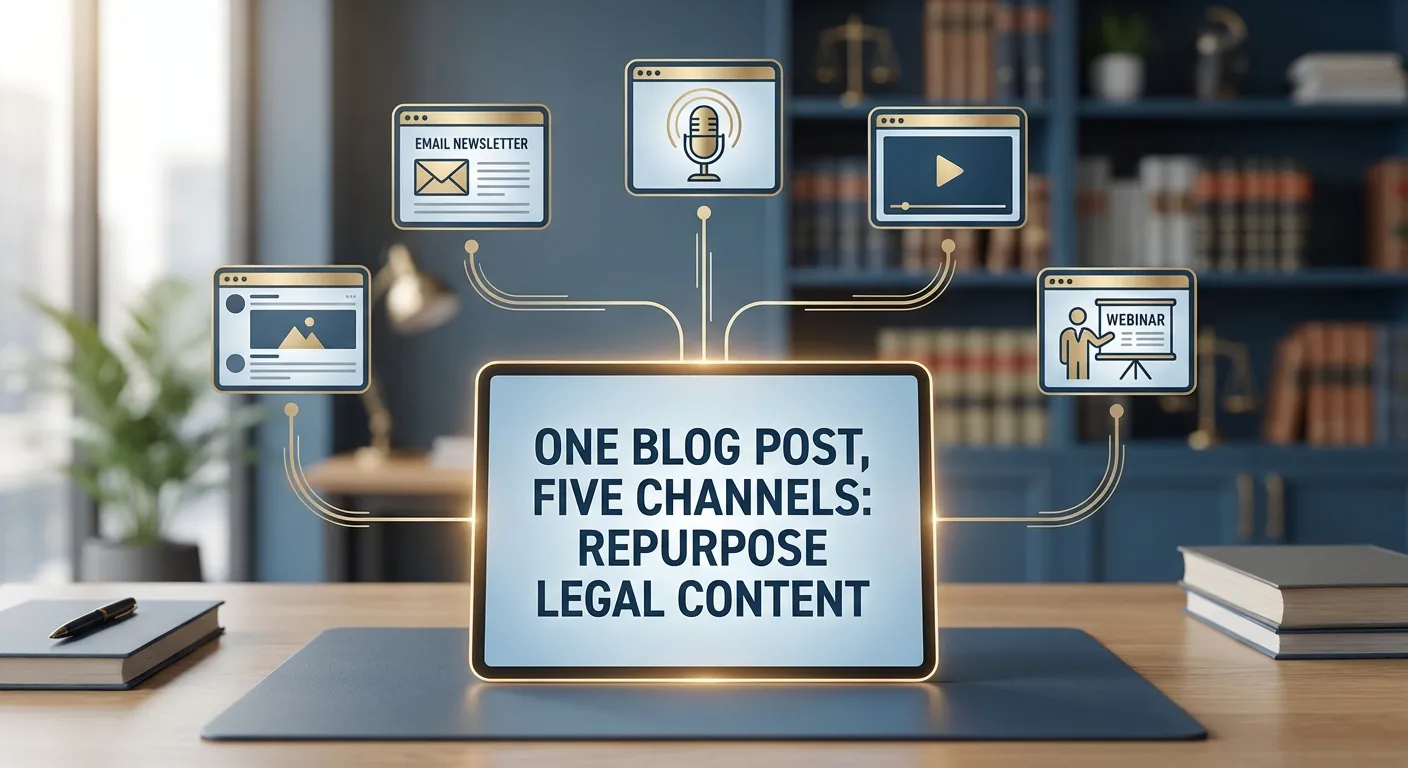
One Blog Post, Five Channels: How to Repurpose Legal Content Across Your Marketing
In today's competitive legal landscape, simply creating great content isn't enough. 89% of law firms consider content "very important" to their overall marketing strategy, yet many struggle with the time and resources needed to consistently produce new material. The solution? Strategic legal content repurposing. This intelligent approach allows you to amplify your message, reach a wider audience, and maximize your return on investment without reinventing the wheel every time.
Ready to transform a single piece of content into a multi-channel marketing powerhouse? Let's dive into how you can do it.
The ROI Case for Smart Legal Content Repurposing
The numbers speak for themselves. Law firms are seeing significant benefits from their content efforts:
- Amplify Reach: Multi-channel content syndication can boost your reach by over 300% when executed strategically.
- Drive Organic Traffic: Organic search accounts for 52.6% of total law firm website traffic, boasting a 7.5% conversion rate, significantly outperforming PPC's 2.2%.
- Impressive ROI: Law firms experience an average 526% ROI from SEO within three years.
- Top Performer: 13% of law firms report that content marketing delivers their highest ROI.
Despite these compelling statistics, many law firms underutilize content repurposing due to perceived time and resource constraints. However, by strategically adapting your existing content, you can tap into these benefits, driving greater engagement and client acquisition.
Five Strategic Distribution Channels for Your Legal Content
A single blog post can be the cornerstone for content across multiple platforms. Here’s how to adapt your message for maximum impact on key channels:
1. Your Law Firm Blog: The Foundation
Your original blog post is the heart of your repurposed content. Ensure it's comprehensive, well-researched, and SEO-optimized for your target keyword. This is the piece that will house the most detailed information and serve as the anchor for all subsequent adaptations. Consider adding internal links to relevant service pages, such as those detailing law firm website development or specific practice areas.
2. Email Marketing: Direct to Inboxes
Don't just share a link to your blog post. Craft a compelling email newsletter that:
- Summarizes the key takeaways of your blog post.
- Highlights 1-2 critical action points or insights.
- Includes a strong call-to-action to read the full article on your blog.
- Can be segmented for different client groups based on their interests.
3. Social Media (General): Bite-Sized & Engaging
For platforms like Facebook, Twitter (X), and Instagram, focus on breaking down your blog post into digestible snippets. 71% of law firms use social media marketing, and 84% generate leads through organic social traffic. Think:
- Quote Cards: Design eye-catching graphics with striking statistics or key quotes.
- Questions: Pose questions related to the blog post's topic to spark discussion.
- Short Videos/Reels: Summarize the main points in a 30-60 second video.
- Infographics: Visually represent data or complex legal processes.
Leverage your content team for social media content creation to maintain consistency and quality.
4. LinkedIn: Professional Insights & Thought Leadership
LinkedIn is ideal for professional networking and showcasing thought leadership. Instead of just sharing your blog link, repurpose your content into:
- "LinkedIn Articles": Publish a condensed or expanded version of your blog post directly on LinkedIn, offering new perspectives or deeper analysis.
- Discussion Starters: Post a provocative question from your article and encourage comments.
- Bullet-Point Summaries: Share 3-5 key takeaways as a text-only post.
- Slide Decks: Turn the main points into a visual presentation.
5. Legal Directories & Q&A Platforms: Targeted Authority
Many legal directories allow firms to publish articles or answer questions. Repurpose sections of your blog post to:
- Answer Common Questions: Use your content to provide detailed answers on Avvo, Quora, or similar platforms, citing your blog post as a resource.
- Short Articles: Submit abridged versions of your blog content to directories that accept syndicated content, ensuring proper attribution.
From Blog Post to Five Formats: Practical Examples
Let's imagine your blog post is titled "Navigating Remote Work Legalities: A Guide for Employers." Here’s how you’d repurpose that legal content:
- Original Blog Post: "Navigating Remote Work Legalities: A Guide for Employers" (comprehensive guide).
- Email Newsletter: "Is your remote work policy compliant? 3 key insights from our latest guide." (Snippet, link to full post).
- Social Media: "Infographic: 5 States with the Strictest Remote Work Tax Rules." (Visual, short text).
- LinkedIn Article: "The Future of Hybrid Work: Legal Challenges & Proactive Solutions." (Deeper dive into a specific aspect, linking back to original).
- Legal Directory Answer: "Question: What are the legal risks of hiring remote employees in different states? Answer: (Summary from blog post, link to full guide)."
Protecting Your SEO While Syndicating
One common concern with legal content repurposing is inadvertently creating duplicate content issues that can harm your SEO. This is where technical SEO best practices come into play:
- Canonical Tags: When syndicating full articles to external sites, always request that they include a canonical tag pointing back to your original blog post. This tells search engines which version is the authoritative source.
- Strategic Republishing: If republishing on platforms like LinkedIn Pulse or Medium, ensure you use their built-in syndication features that handle canonicalization automatically, or always publish a significantly modified version that offers new value.
- Attribution: Always clearly attribute the original source with a link back to your law firm's blog. This not only helps SEO but also maintains professional integrity.
- Vary Your Content: When adapting for different channels, aim to change the introduction, conclusion, and focus slightly. This makes the content unique enough for each platform while still conveying the core message.
By following these guidelines, you can safely and effectively distribute your valuable legal content repurposing efforts without compromising your search engine rankings.
Ready to maximize your firm's content ROI? Let's discuss how strategic legal content repurposing can elevate your marketing efforts. Contact us today for a consultation.